Navigating transformation at Atlassian
How a 2% satisfaction rate became the foundation for Atlassian’s future.
The challenge
By 2022, nearly half of Jira’s users reported difficulty finding their work due to a complex and inconsistent navigation system. Positive sentiment hovered between 2–8%, with over 45% of feedback citing navigation as a pain point.
It wasn’t just about usability; navigation issues were a platform-wide bottleneck, impacting everything from scalability and performance to user retention and Atlassian’s ability to deliver a cohesive experience across multiple products.
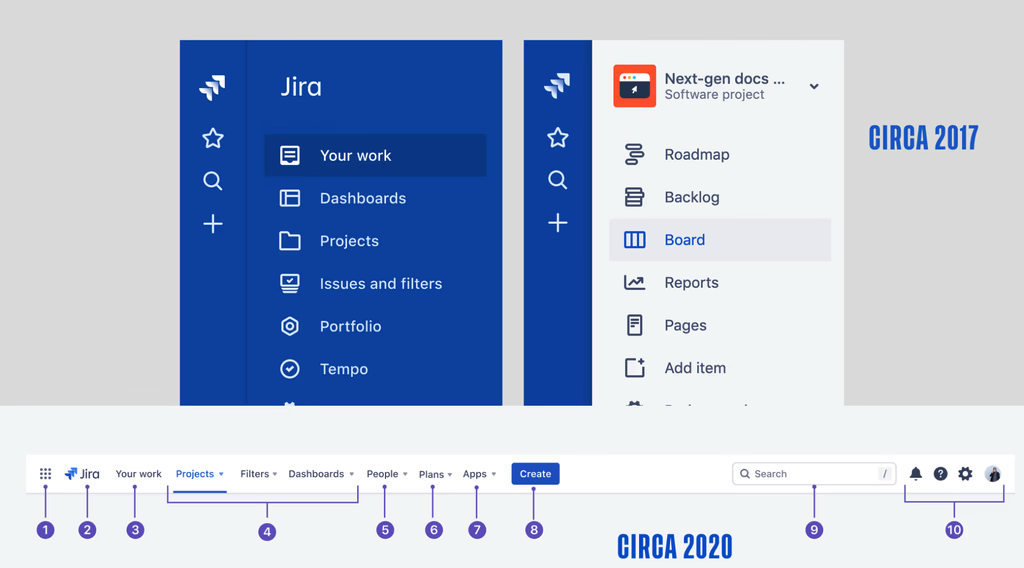
Cluttered and unscalable
Global and project-specific objects were mixed, making the navigation both unintuitive and hard to learn. The system’s lack of flexibility also hindered new product launches and long-term growth.
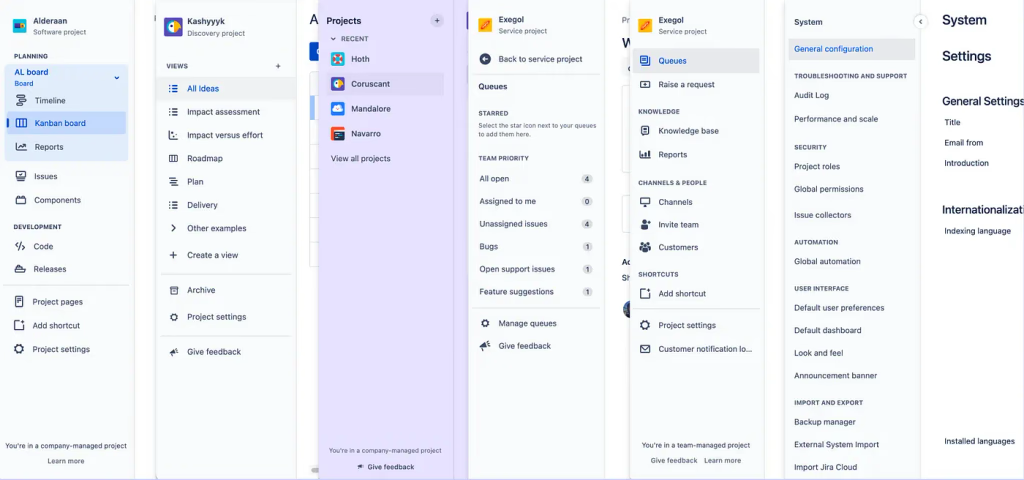
Inconsistent experiences
As Jira products evolved independently, their navigation diverged. Users had to relearn workflows across products — turning a core Atlassian strength (multiple products) into a painful switching process.
This wasn’t just a usability issue—it was a platform problem impacting scalability, performance, and Atlassian’s ability to deliver a cohesive experience across products.
The vision
As the Senior Product Designer for Jira Platform (playing a role as the Directly Responsible Individual and Subject Matter Expert for the navigation area), I set out to resolve long-standing user frustrations with cluttered, inconsistent navigation. The initial focus was Jira-specific and completely design-led:
- Simplify Navigation: Streamline global vs. project-level objects and improve transition between these different modes.
- Balance Flexibility: Ensure cross-Jira consistency (Software, Work Management, Service Management), while accommodating unique needs of the products.
- Empower Users: Introduce customization options so users can adapt Jira to their workflows.
However, as the work progressed, it became clear that the challenges Jira faced were reflective of broader issues across Atlassian’s ecosystem. Through workshops, cross-product collaboration, and leadership feedback, the scope evolved into something larger: a unified navigation system that could scale across Atlassian’s entire product suite.
Key Outcomes of securing leadership buy-in:
- Core UI components & shared codebase for performance and scalability.
- Unified Atlassian Navigation Framework, setting the foundation for a “System of Work.”
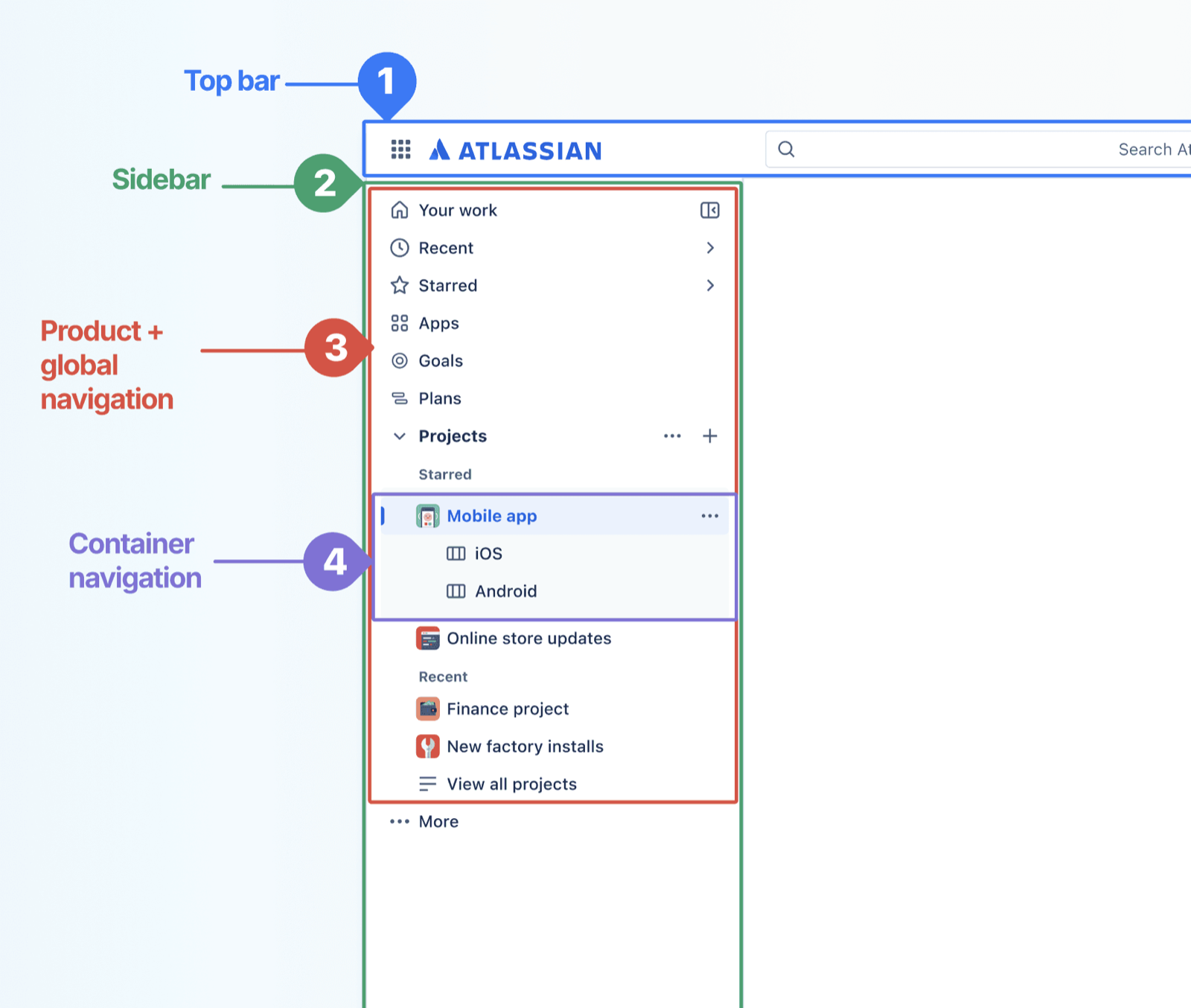
- A new customizable sidebar for global items, with core product-level actions at the top (account, branding, search, create, product switch).
The execution
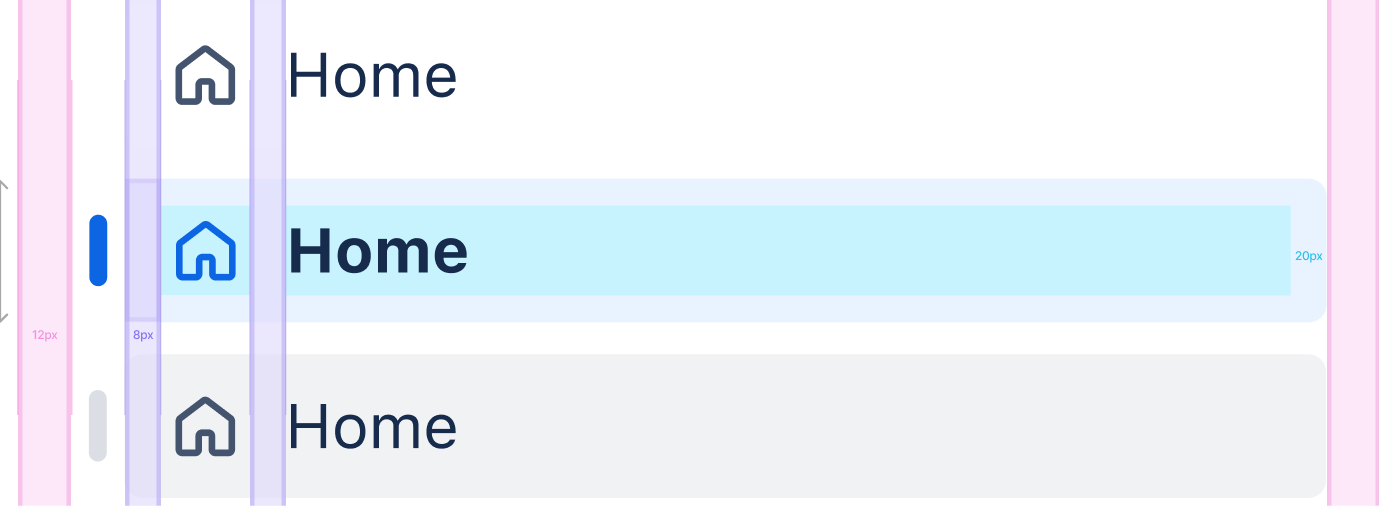
Collaboration was at the heart of this effort. I led cross-functional workshops, gathering insights from Jira Software, Jira Work Management, Jira Service Management, and stakeholders across Atlassian. Feedback looped back into iterative design sessions, ensuring we struck the right balance of consistency and product-specific needs. I developed internal sharing tools to communicate the level of fidelity and agreement of certain areas of the product and keep all our stakeholders in the loop.
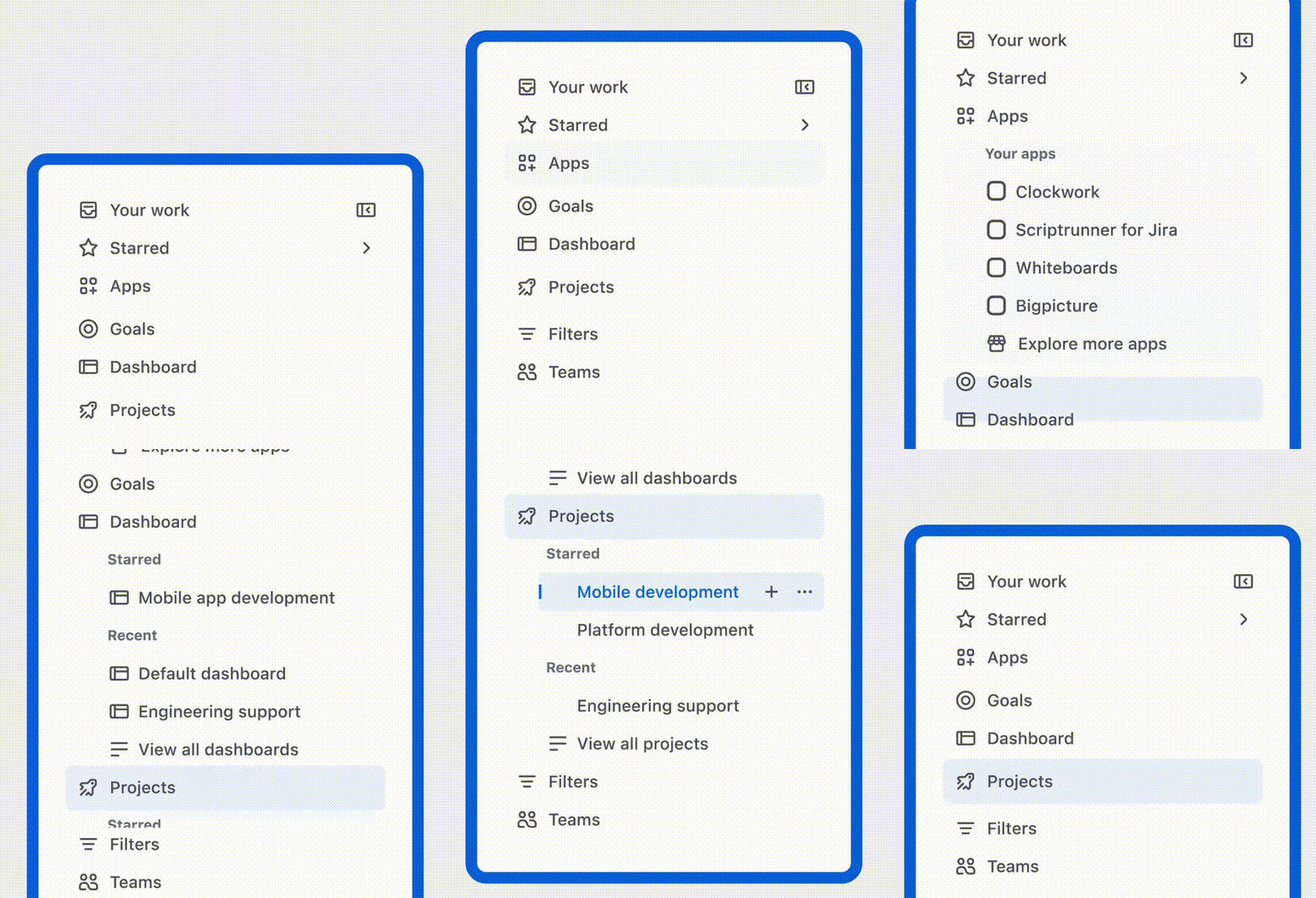
Customizable sidebar
Empowered users to pin Starred and Recent items, creating a personalized workflow experience.
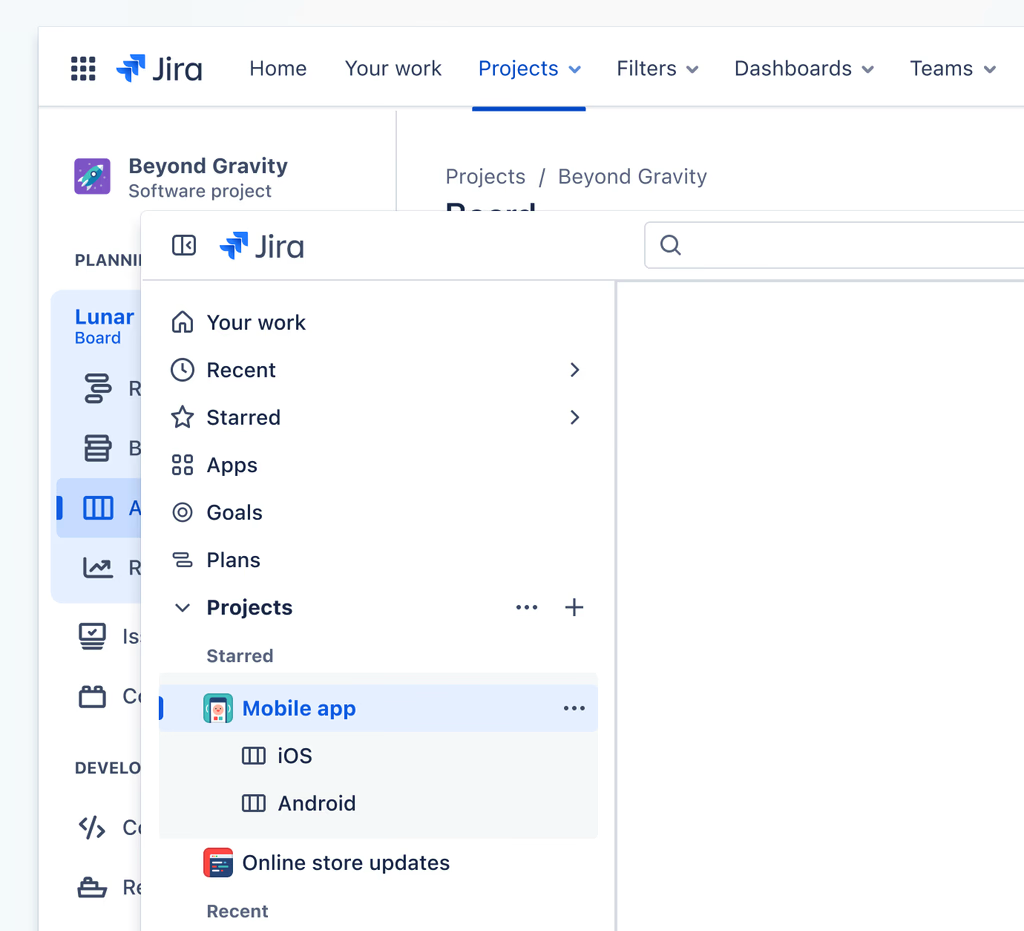
Streamlined top bar
Focused on global actions like Search, Create, and product switching for clarity and consistency.
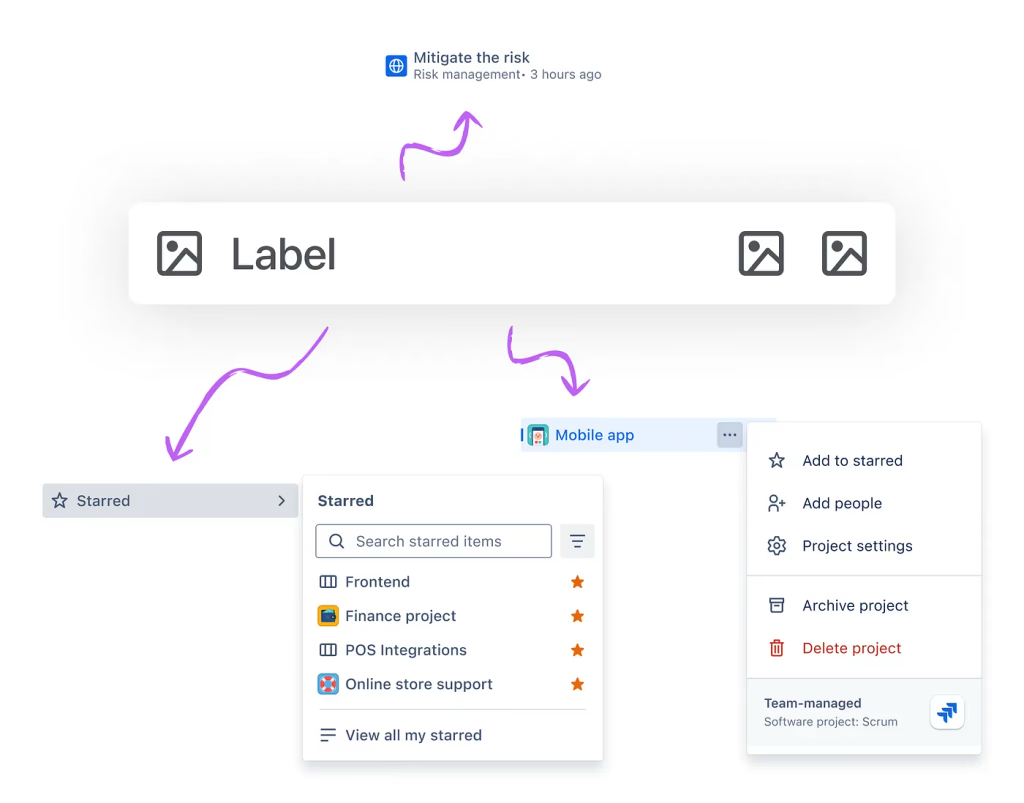
Scalable components
Ensured alignment across Jira and the broader Atlassian suite, simplifying updates and fostering collaboration between teams.
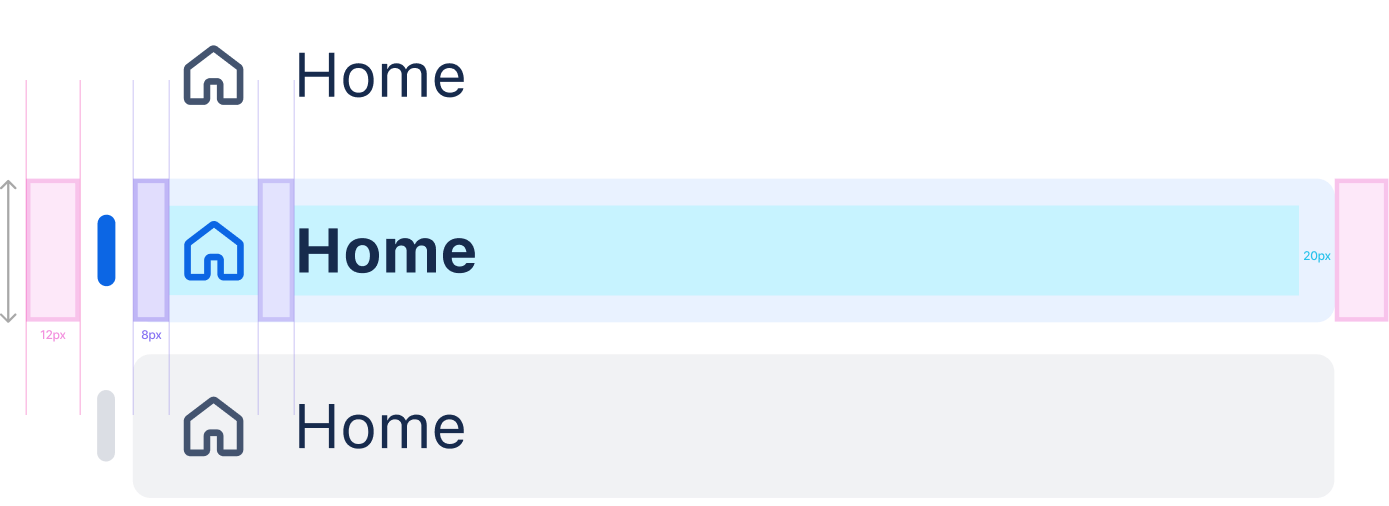
The impact
- Significant Rise in Satisfaction: SEQ (Single Ease Question) scores and overall user sentiment rose considerably post-launch, reversing a two-year downward trend.
- Reduced Task-Switch Time: By consolidating global actions and letting users pin frequently accessed items, we cut the time it takes to switch between projects.
- Foundation for Future Growth: The unified navigation system became Atlassian’s blueprint for cohesive experiences and laid the groundwork for the company’s “System of Work.”
Beyond boosting immediate usability, the redesign underscored my ability to:
- Facilitate Cross-Product Alignment: Navigating organizational complexity and unifying multiple product teams under a shared vision.
- Iterate & Validate: Identifying and translating core issues from user feedback into tangible improvements through continuous testing.
- Drive Strategy: Ensuring design solutions aren’t just UI tweaks, but strategic enablers for long-term product and business goals.
Conclusion
The navigation redesign was a pivotal project and much more than a UI refresh—it was a holistic reimagining of how users discover, navigate, and engage with Atlassian’s complex work management systems. It not only elevated satisfaction from single-digit percentages but also transformed Atlassian’s product strategy, uniting multiple product lines under a single framework, simplifying go-to-market strategies and delivering a scalable foundation.
By leading a cross-functional, multi-product initiative, I demonstrated how thoughtful design, organizational buy-in, and user-centered iteration can solve deep-rooted platform issues—and set the stage for a future where Atlassian’s ecosystem grows seamlessly alongside its users.